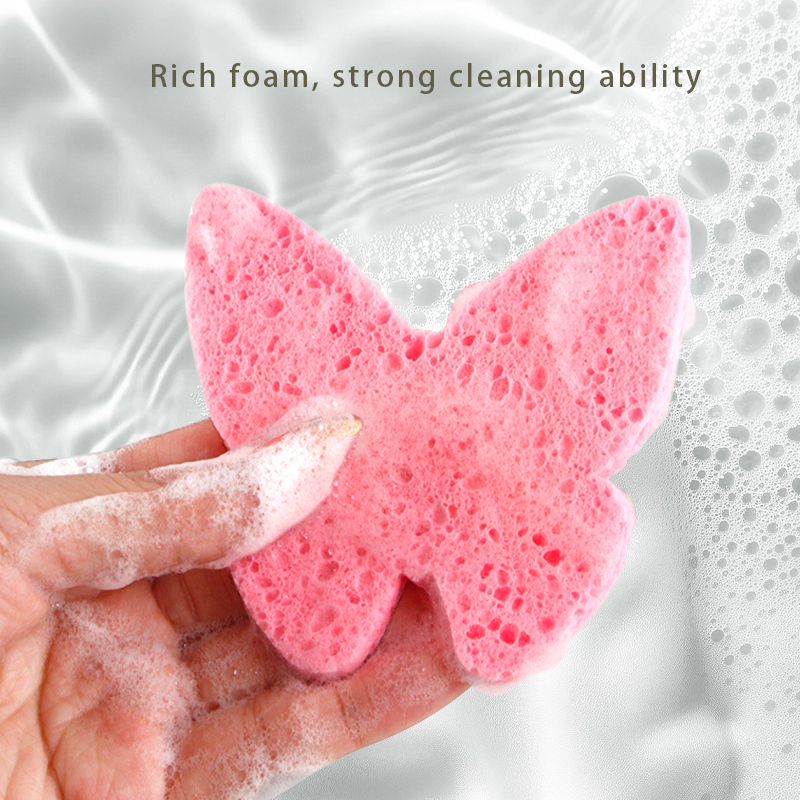
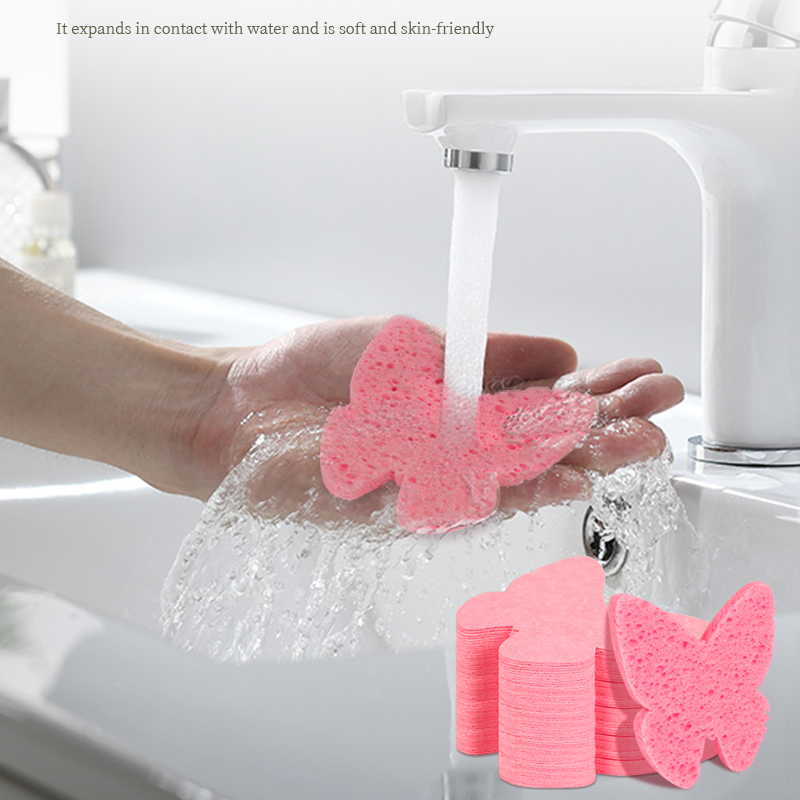
Step 1: Activation by Water—Expansion & Pore Opening
Step 2: Lather Formation—Amplifying Cleanser Efficacy
Cellulose fibers are hydrophilic (water-attracting) due to their chemical composition (cellulose molecules contain hydroxyl groups that bond with water).
- When dry, the sponge is compact and firm—its pores are collapsed and tightly packed.
- When soaked in water, the fibers absorb moisture via capillary action (water is drawn into tiny spaces between fibers), causing the sponge to expand 2–3x in size.
- This expansion opens up millions of micro- and macro-pores (ranging from 1–100 micrometers), creating a "sponge-like" matrix ready to trap dirt.
Cellulose sponges excel at creating rich, creamy lather with minimal cleanser (facial cleanser, soap, etc.), which enhances cleaning power:
- The porous structure provides a large surface area for the cleanser to mix with water.
- As you squeeze or rub the sponge, air is trapped in the pores, combining with water and cleanser to form stable bubbles (lather).
- Lather lowers the surface tension of water, allowing it to spread more easily across surfaces (e.g., skin, dishes) and penetrate dirt/makeup residue.